|
There are two big buckets of trips: those where you have lots of flexibility and those where you have little flexibility.
You never want to overpay for flights, but the strategy to get a good deal varies significantly based on which type of trip you’re taking.
We discuss at length how to reverse your search to get the best deals when you have a good amount of flexibility.
But when you’ve got to be somewhere at a specific time—your sister’s wedding in Chicago next June, say—the best thing you can do to avoid overpaying is to time your booking right.
|
|
|

Big brands bet on AI—Here’s why travel is next
Savvy travelers know when, where, and why to spend—and brands that understand this win their business. Travel is AI’s next big disruption, reshaping how brands connect with high-intent travelers in real time.
RAD Intel is a pre-IPO company using AI to uncover what truly drives travel decisions beyond just price.
-
$37M raised | 6,000+ investors, including Adobe & Fidelity Ventures
-
Fortune 1000 clients: MGM, Hasbro, Omnicom, Skechers, Sweetgreen
-
Explosive growth—Q1 2025 sales contracts already doubled 2024’s total
-
Valuation surge: $5M → $85M in four years*
Now, through RAD Intel’s Reg A+ offering, accredited and everyday investors can get in early on this AI-driven shift in travel marketing.
Be part of the future of AI in travel.
|
|
Goldilocks Window
There’s no set time or date that’s always cheapest to book. (Internet myths like Tuesday at 1pm or exactly 63 days out are dead wrong.)
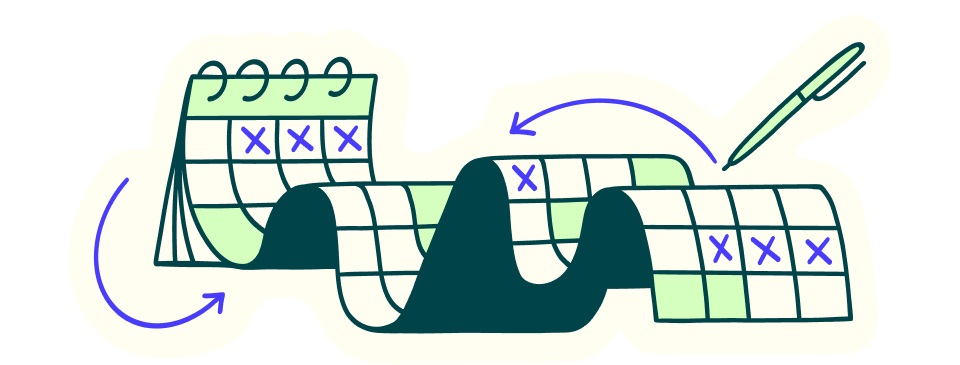
Instead, the best approach is to target a period in advance of travel when cheap fares are most likely to pop up. I call these Goldilocks Windows.
For domestic flights, it’s normally 1–3 months before your travel dates. For international trips, it’s 2–8 months prior. If your trip is during a peak travel period (Christmas, summer, St. Patrick’s Day in Dublin) add a couple months to those windows.
Not every flight is cheap during a Goldilocks Window, just as not every day is snowy in winter. But it’s the period when your odds of a good deal are at their highest.
|
|
|
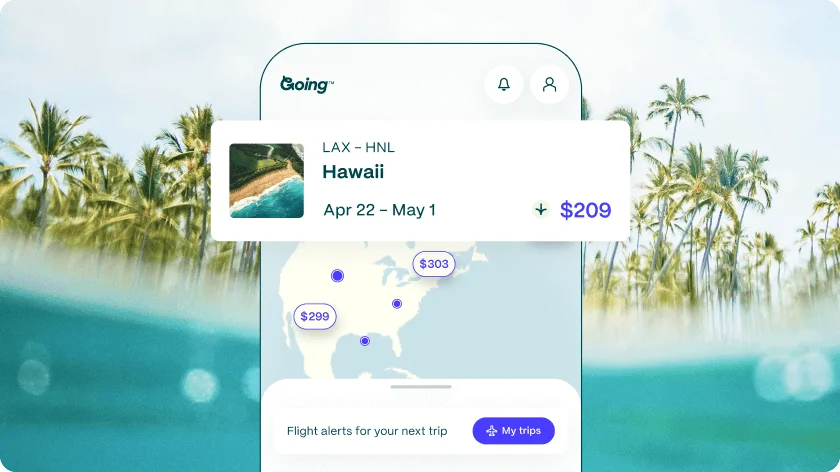
Unlock flight alerts for 40% off
Track any trip and get real-time fare alerts—no endless searching, no overpaying. Upgrade now, set an alert, and we’ll handle the rest!
|
|
Fly nearby
We’ve talked about the Greek Islands Trick to get cheaper flights. If fares are staying persistently high for a trip you’re eyeing, this can be useful.
Say you want to visit NYC for New Year’s, but flights are $700 roundtrip or more. Instead of accepting an outrageous price, see what flights to Philadelphia, Hartford, Boston, or DC cost. If you find a deal to Philadelphia for $200 roundtrip, the question then becomes: Would you be willing to take the train from Philadelphia to NYC in order to save $500?
The same can apply for your departure flight. Going member Shanna Lathwell once wanted to take her family of five from Detroit to Bali for spring break, but flight prices were $2,500 each. One day, she got an alert from Going about flights from Chicago to Bali for just $500 each. Was the four-hour drive from Detroit to Chicago worth it to save $10,000 total on flights? No question: Yes.
|
|
|

Best-ever offer on a top travel card
You don’t want to miss this. One of the best travel cards for beginners raised its signup offer.
Act fast—this won’t be around for long.
|
|
Book now, rebook later
How often have you had the anxiety that prices will drop right after you book a flight? If so, you’re in luck.
One of the most customer-friendly shifts in the past few years has been airlines getting rid of change fees. Pre-pandemic, there was often a $100+ penalty to change your flights, in addition to any fare difference. Starting in late 2020, though, US airlines got rid of change fees en masse. (Basic economy tickets are still restricted, unfortunately.)
This has given travelers a heads-you-win, tails-airlines-lose opportunity: If the price of your flight drops after booking, you can rebook and pocket the difference in future travel credit.
Take a previous $400 flight I booked to Denver, for instance. After booking, I set myself a calendar reminder to check the price every Monday morning. Sure enough, three weeks later, the price had dropped to $300. I called Alaska Airlines, asked the agent to rebook it, and five minutes later had the same flight plus $100 in travel credit.
If the price keeps dropping, you can keep rebooking. That Denver flight wound up dropping two more times—all the way down to $175—and each time I rebooked for additional credit.
|
|
The bottom line
Flexibility is a currency, and for trips where there’s little flexibility, that often means higher fares. But just because you can’t get the best prices doesn’t mean you should give in and overpay. By getting the timing of your booking right and employing a few tricks, even trips with little flexibility can still see great prices.
|
|

|
|
Written by:
Scott Keyes
|
Scott Keyes (Going Co-Founder and Chief Flight Expert)
|
|
|
Share with a fellow travel lover by forwarding to a friend.
|
|
|
Get the app today 
|
|
|