|
Flights are meant to get you there (wherever “there” might be), not hold you back. Affordable flights can be the difference between “I can’t make it” and you actually venturing into quaint Japanese mountain towns dotted with historic farmhouse stays, diving beneath the surface to swim with gentle manta rays off the shores of the Big Island, or descending into an almost-holy grotto filled with 3,000 wheels of cheese.
Setting up a flight alert in the Going app ensures that you never miss a great deal to Japan, Hawai'i, the Swiss Alps—or wherever the wind may take you.
Need inspiration for where to go next? Here, you’ll find a few amazing experiences had by Going contributing writers to kickstart your planning.
|
|
|

Apple’s Starlink update sparks huge earning opportunity
Apple just secretly added Starlink satellite support to iPhones through iOS 18.3.
One of the biggest potential winners? Mode Mobile.
Mode’s EarnPhone already reaches +45M users that have earned over $325M, and that’s before global satellite coverage. With SpaceX eliminating "dead zones" worldwide, Mode's earning technology can now reach billions more in unbanked and rural populations worldwide.
Their global expansion is perfectly timed, and you still have a chance to invest in their pre-IPO offering at just $0.26/share.
Mode’s recent 32,481% revenue growth and their newly reserved Nasdaq ticker $MODE puts them one step closer to a potential IPO.
Invest in Mode’s pre-IPO offering at $0.26/share and earn up to 100% bonus shares*.
|
|
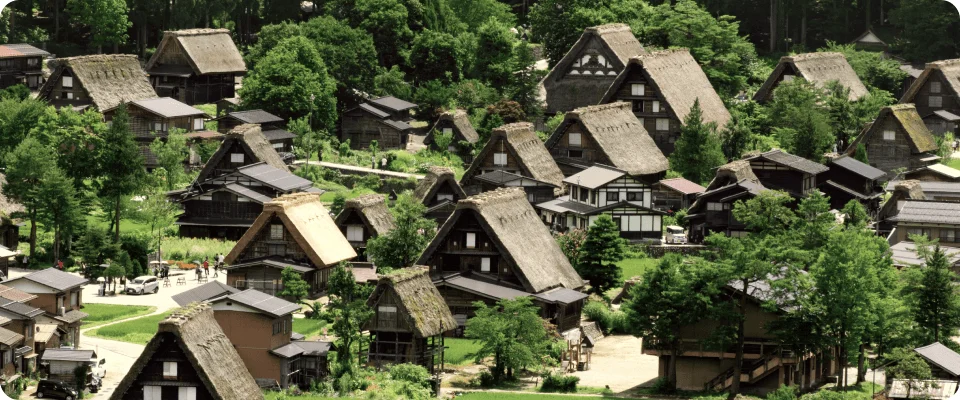
Sleep in a Japanese farmhouse
Stepping off the bus at Shirakawa-gō, I felt as if I had time-traveled back to samurai-era Japan. Two hours ago, I was dragging my bags through the noisy neon-lit streets of Kanazawa. Now, I stood in a picture-perfect mountain hamlet dotted with triangular thatched-roof farmhouses. To my delight, I was going to spend the night under one of these charming pointed peaks.
Shirakawa-gō is famous for its two- or three-story farmhouses, which are called gasshō-zukuri (“prayer hands”) because the silhouette resembles two palms pressed together. This striking architectural style dates back several hundred years, beginning in the Edo period of the 18th century, and is found only in Gifu and Toyama prefectures, the rugged alpine regions northwest of Tokyo. I chose to visit Shirakawa-gō, a UNESCO World Heritage Site, because it has the greatest concentration of these historic homes.
|
|

|
|
Follow writer La Carmina through Japan, as she weaves her way through mountain towns of gingerbread-like gasshō-zukuri, learns about their sturdy construction, and feasts on homemade delicacies at a family-run inn.
|
|
|
Getting there
Most visitors begin their journey by flying into Tokyo (HND or NRT airports). From Tokyo, the fastest way to reach Shirakawa-gō is via the 2.5-hour Hokuriku bullet train to Toyama, followed by a 1.5-hour bus. Travelers can also start in Kanazawa and take a 2-hour bus to the village, or from Nagoya on a 3-hour bus. It’s also possible to visit on a guided day trip from Takayama, about 45 minutes away. The closest airport to Shirakawa-gō is Chubu Centrair (NGO) in Aichi prefecture.
Average Going price: $819 roundtrip
Average regular price: $1,250 roundtrip
|
|
How to do it
Shirakawa-gō has four distinct seasons, and each is wonderful for different reasons. In the winter, snow blankets the village, and the gasshō-zukuri are illuminated like icing-topped gingerbread houses. Visit in the spring for canopies of cherry blossoms, in the summer for pleasantly warm weather, and in the fall for fiery red foliage.
Premium and Elite members can set flight alerts for Japan. Enjoy 40% off memberships now with promo code #######.
|
|
|
|
|
No interest until 2026 + exceptional welcome offers
Planning a big expenditure or a vacation in 2025? Paying down your credit card balance can be tough, with the majority of your payment going to interest. You can avoid interest charges for up to 15 months with these cards. Enjoy a rare combination of long-term 0% intro APR and high bonus reward offers, plus no annual fee. Turn everyday spending into tangible rewards.
|
|

Night dive with manta rays in Hawai'i
There’s something almost dreamlike about scuba diving at night. Or at least that’s what I noticed in the inky darkness of the ocean, which was streaked with beams from flashlights as our group descended. Weighed down enough so we could sit without rocking in the natural current of the water, we gathered with other divers around the “campfire,” a set of big, powerful lights on the sandy ocean floor.
Just as I had found a comfortable seat, I saw it. A manta ray—with a wingspan twice the height of an adult human—hit the beam of light that was speckled with plankton, opened its enormous mouth, and twirled upward, fins spread wide.
For the next 45 minutes, I observed a handful of rays as they swam around the lights in what looked like a choreographed dance. They swooped, flipped, and curled their cephalic horns, coming within inches of us spectators as they gorged on plankton.
Only one thought rolled through my head on a loop throughout the experience: Is this even real?
|
|

|
|
Join writer Zanny Merullo Steffgen beneath the surface on the Big Island, as she learns the intricacies of the Hawaiian ray population, why Kona’s the spot for viewing, and how local efforts are working to preserve marine life for generations to come.
|
|
|
Getting there
Most Kona dive shops are located five or six miles from Kona International Airport (KOA), and some are located downtown within walking distance from many accommodations. Because the manta dives take place at night and some excursions leave from a dock outside of town, it would be helpful to have a car during your stay.
Average Going price: $359 roundtrip
Average regular price: $794 roundtrip
|
|
How to do it
To avoid contributing to overtourism, steer clear of manta ray experiences in Hawai'i during the winter holidays and spring break periods. Instead, set a flight alert to the Hawaiian islands during the spring and autumn, when the weather is ideal for exploring and there are fewer tourists.
|
|
|
|
|
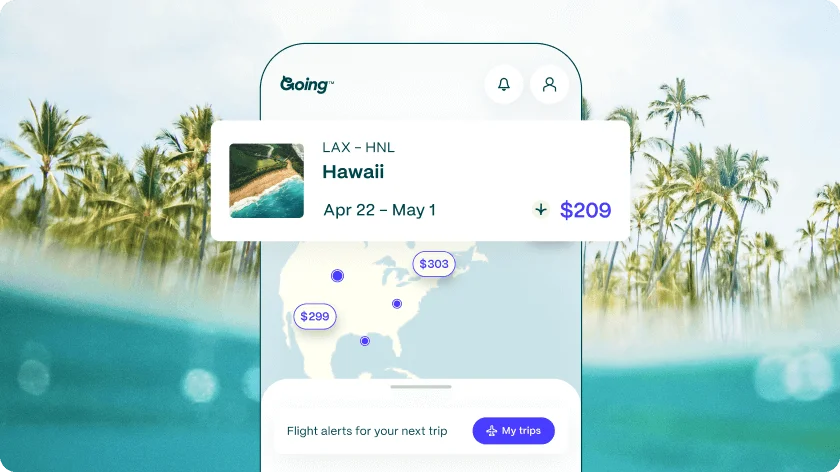
Unlock flight alerts for 40% off
Track any trip and get real-time fare alerts—no endless searching, no overpaying. Upgrade now, set an alert, and we’ll handle the rest!
|
|
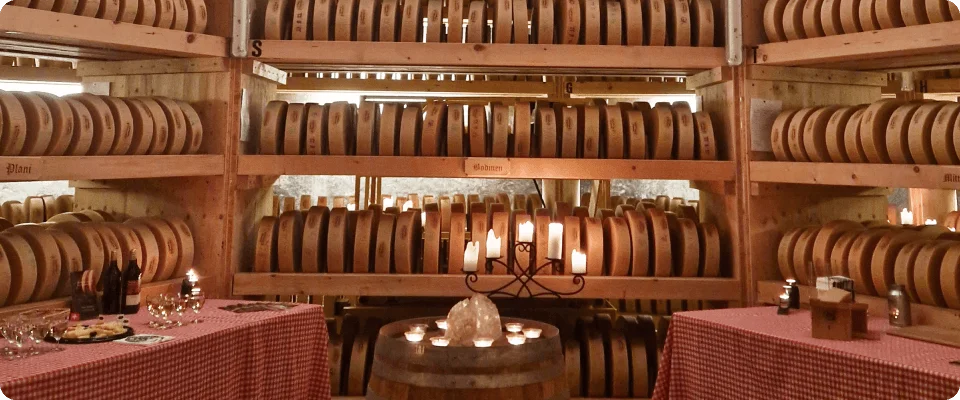
Eat your way through a Swiss cheese grotto
No matter where you stand in Gstaad, a luxury ski town in the Swiss Alps, you’re sure to see (and often even hear) cowbells. The town is marked by designer shops, upscale restaurants, and picture-perfect wooden houses decorated with cowbells to signify dairy farmers’ homes.
As you venture farther afield into the lush grassy valleys, a more rustic life unfolds, where you’ll see the bells swinging from the necks of actual cows. There are fewer people out here, making for a greater sense of peace sheltered beneath lofty peaks. This is where Gstaad’s cheesemaking heritage thrives—and where you’ll find Molkerei Gstaad.
Molkerei Gstaad is a fine-cheese shop with an underground cheese grotto—a room stacked floor to ceiling with up to 3,000 wheels of aging cheese produced by 68 local cooperative farmers.
|
|

|
|
Follow writer Rachael Davies into the grotto, where she sampled local cheeses, learned how traditions have been passed between generations, and got a sense of just how ingrained the stuff is in Swiss life.
|
|
|
Getting there
The nearest airport is Geneva Airport (GVA), roughly three hours away from the grotto by train or just over two hours by car. From Geneva, you can make the most of the views of Lake Geneva and the Swiss Alps by taking the Golden Pass Express train from Montreux to Saanen (another ski town located about two miles north of Gstaad). Remember: Travel throughout Europe is a breeze once you’re on the continent, so you could easily fly into another cheap European city—such as London, Paris, or Amsterdam—and take a short regional flight to Geneva.
Average Going price: $520 roundtrip
Average regular price: $859 roundtrip
|
|
How to do it
While Gstaad is best known as a winter ski destination, the sunshine, cool breeze, and average high temperatures around 70°F make it a pleasure to visit in summer as well. If you set up a flight alert in the Going app to fly into Geneva between July and about October, you will see the grotto at its fullest. It’s always being refilled, so even when some wheels are pulled for sale, you can bet there’s more on the way.
|
|
|
|
|
Share with a fellow travel lover by forwarding to a friend.
|
|
|
Get the app today 
|
|
|