It is 4.15pm on a February afternoon, and I am seated on a bright green tractor, bumping down a mud road in Hiregunjal, Karnataka. The weather is warm, around 30℃, and the sky is clear. I watch a pandemonium of parakeets arc through the air, a troop of langurs perched on a neem tree, and a brilliant green bee-eater on an electricity wire munching on something it just caught.
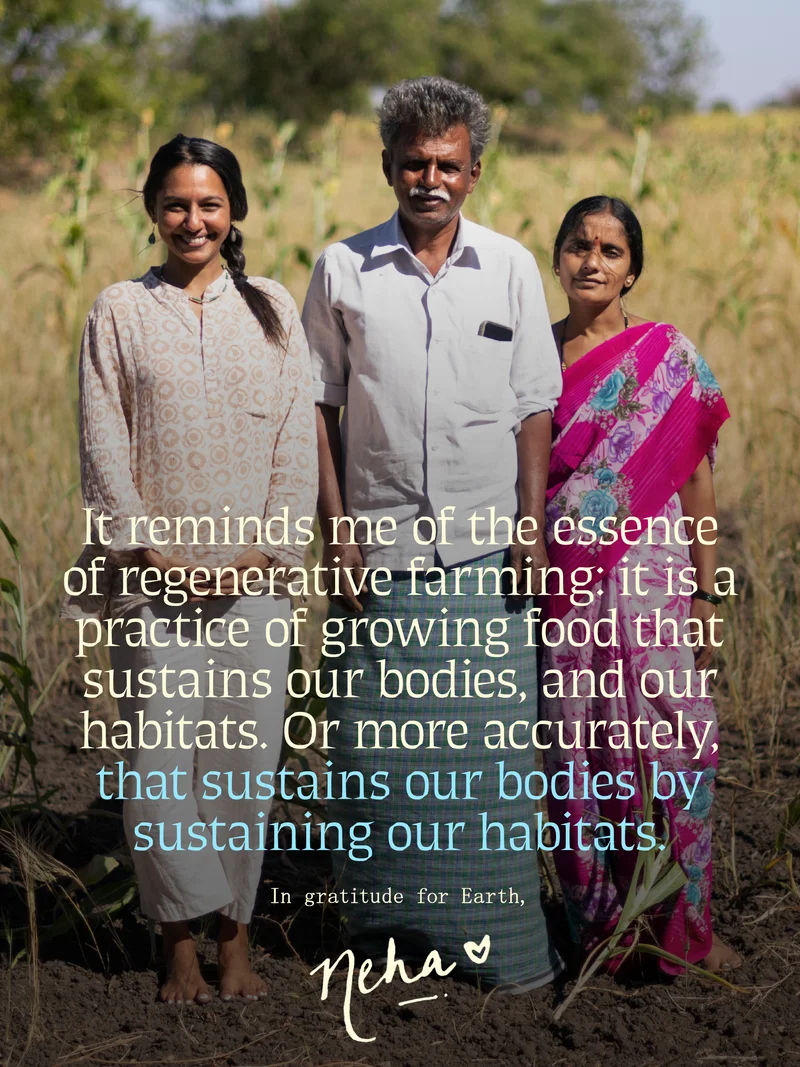
These are arid lands, receiving rainfall for about two months a year. The ground looks parched, yet there is food all around. “See those black birds?” asks Malleshapa Biserotti, the farmer, pointing at a drongo. “It eats the insects on the plants,” he explains. “Does a lot of work for me!”
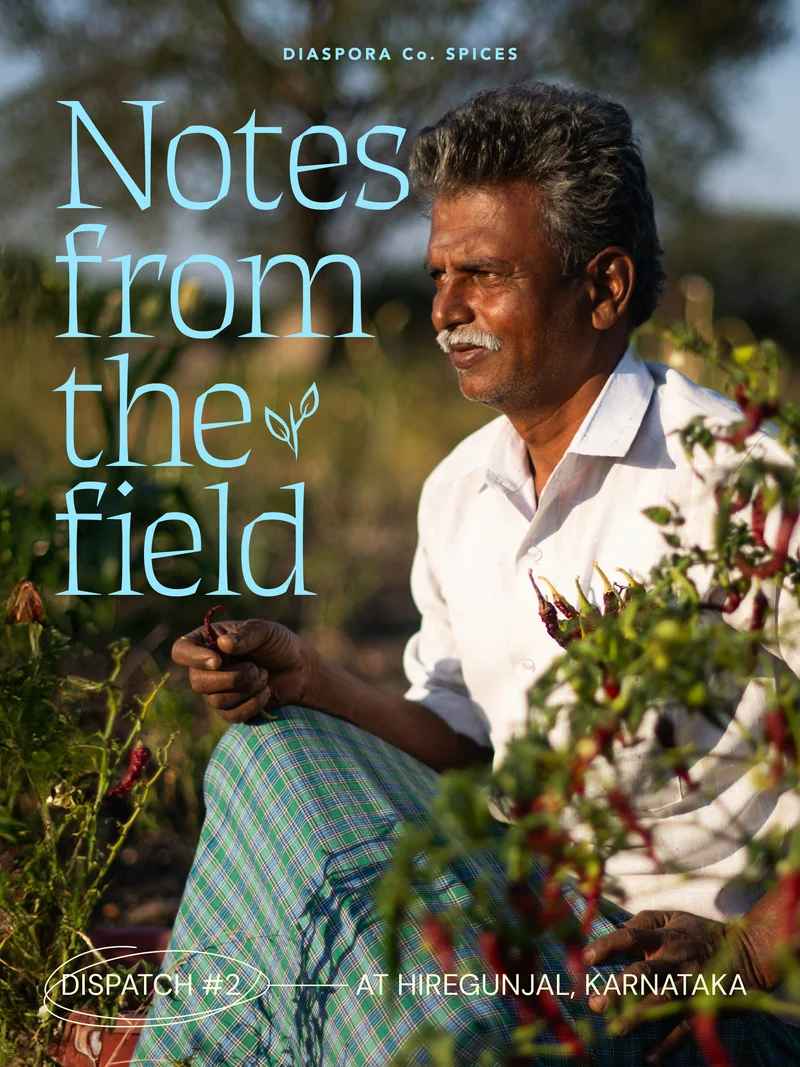
Malleshapa grows our Byadgi chillies, deep maroon with thick wrinkled skin, packing fruity flavor without too much heat. Rows of chilli plants, intercropped with millet, wheat, dill, ajwain, marigolds, pigeon pea, and green gram, are a far cry from the mono-cropped cotton fields we passed.
Malleshapa walks me to a raised strip of fruit trees—custard apple, chikoo, papaya, neem. In their sparse shade is his manure section: piles of cow dung mixed with soil and urine, forming large smooth cakes. When he flips one, I stick my hand in. The mix is cool, moist, and fragrant with earthy goodness. It teems with earthworms, centipedes, beetles, and delicate fungal hyphae: an immense web of life, recycling dung into nutrient-rich manure.
This is the soil food web. Micro-organisms and soil critters process organic matter, making nutrients bio-available to plants—just as microbes in our gut break down food for our bodies. Soil is the planet’s digestive system.
Malleshapa picks up a clump of soil, revealing the pearly white larvae of the rhinoceros beetle. Farmers warned him they were pests, but when he sent his manure for testing, it received an A+ for nutrition and microbes. Over five years, he confirmed the larvae’s role in creating superior compost.
His nine cows graze on plant matter from his fields. Their dung feeds the soil, which feeds the crops, which feed him. This is a closed-loop system—waste reimagined into resilience.
Unlike industrial farms that kill soil life with pesticides and replace it with synthetic fertilizers, this farm thrives on nature’s intelligence. Walking barefoot here, among cows, drongos, and beetles, reminds me that growing food is a deeply collaborative process between human and habitat.